How Terra Oracle AI Turns Field Data into Better Decisions
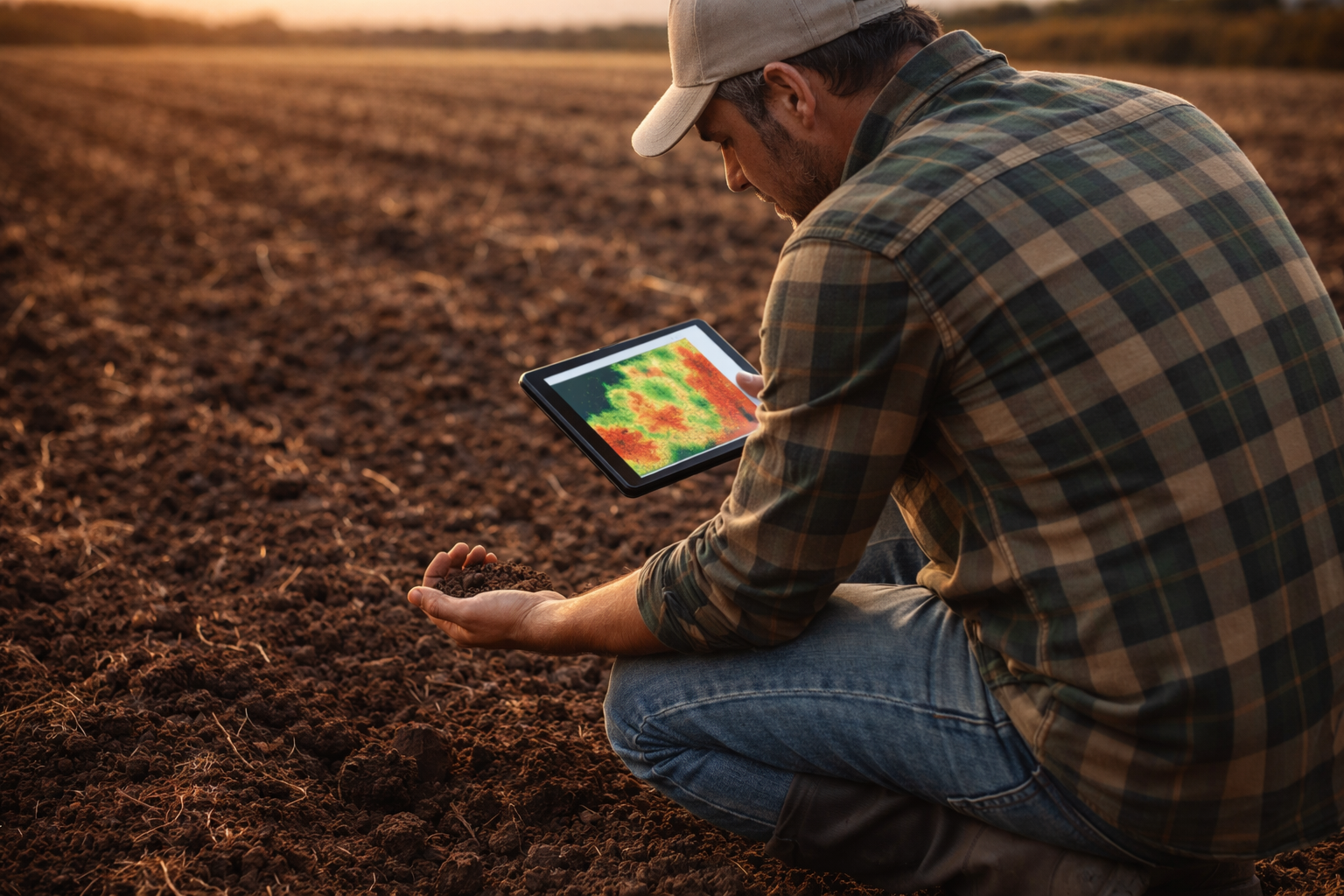
Terra Oracle AI helps farmers and agronomists turn soil, satellite, weather, economic, and operational data into clear, field-specific decisions.
Modern farms do not suffer from a lack of data.
They suffer from fragmented context.
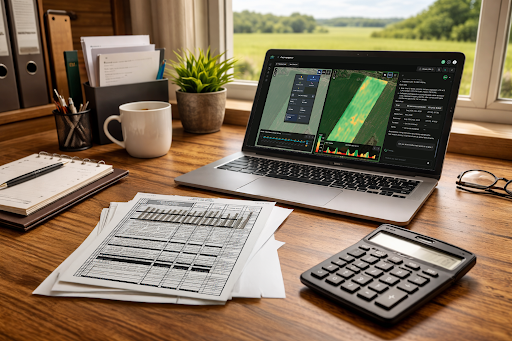
Soil information lives in one system. Satellite imagery in another. Weather in another. Machinery and operational records somewhere else. Economics is often evaluated separately again. By the time all of that is manually assembled, the decision window may already be closing.
That is the real problem Terra Oracle AI is built to solve.
The value of agronomic AI is not that it can answer questions in a chat window.
The value is that it can bring together the full field context and turn it into decisions that are clear, explainable, and actionable.
Why Better Decisions Are Still Hard to Make
Most agronomic decisions are not limited by a single missing metric.
They are limited by the difficulty of interpreting multiple signals at the same time.
A weak zone in the field, for example, is rarely explained by one factor alone. It may be related to soil texture, nutrient variability, pH constraints, recent weather, poor timing of operations, stress visible in satellite imagery, or an economic reality that changes what is worth doing next.
That is why field decisions often become slower than they should be, less precise than they could be, or harder to justify than they need to be.
The challenge is not data collection by itself.
The challenge is decision-making across connected data.

What Terra Oracle AI Changes
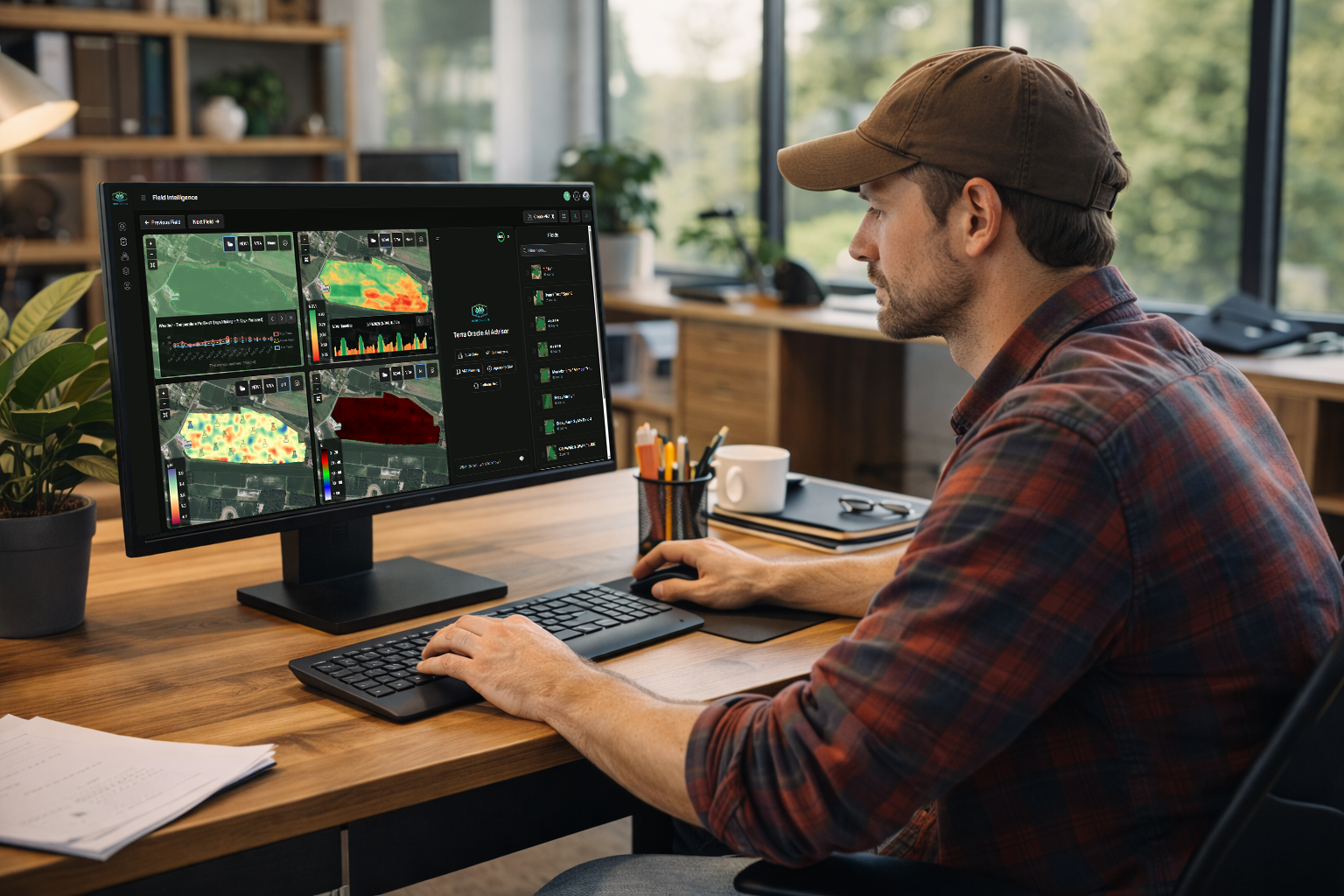
Terra Oracle AI is designed to unify the layers that matter most in field-level agronomy, including:
- Soil data
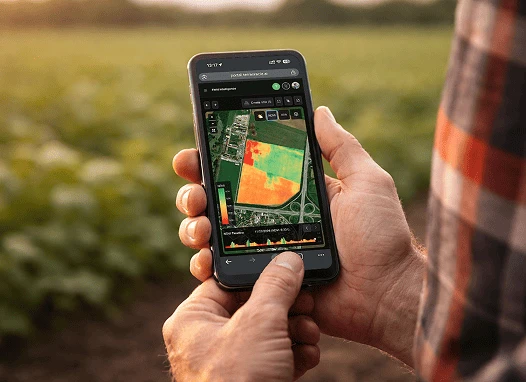
- Satellite monitoring and NDVI
- Weather history and forecasts
- Economic context
- Operational and machinery data
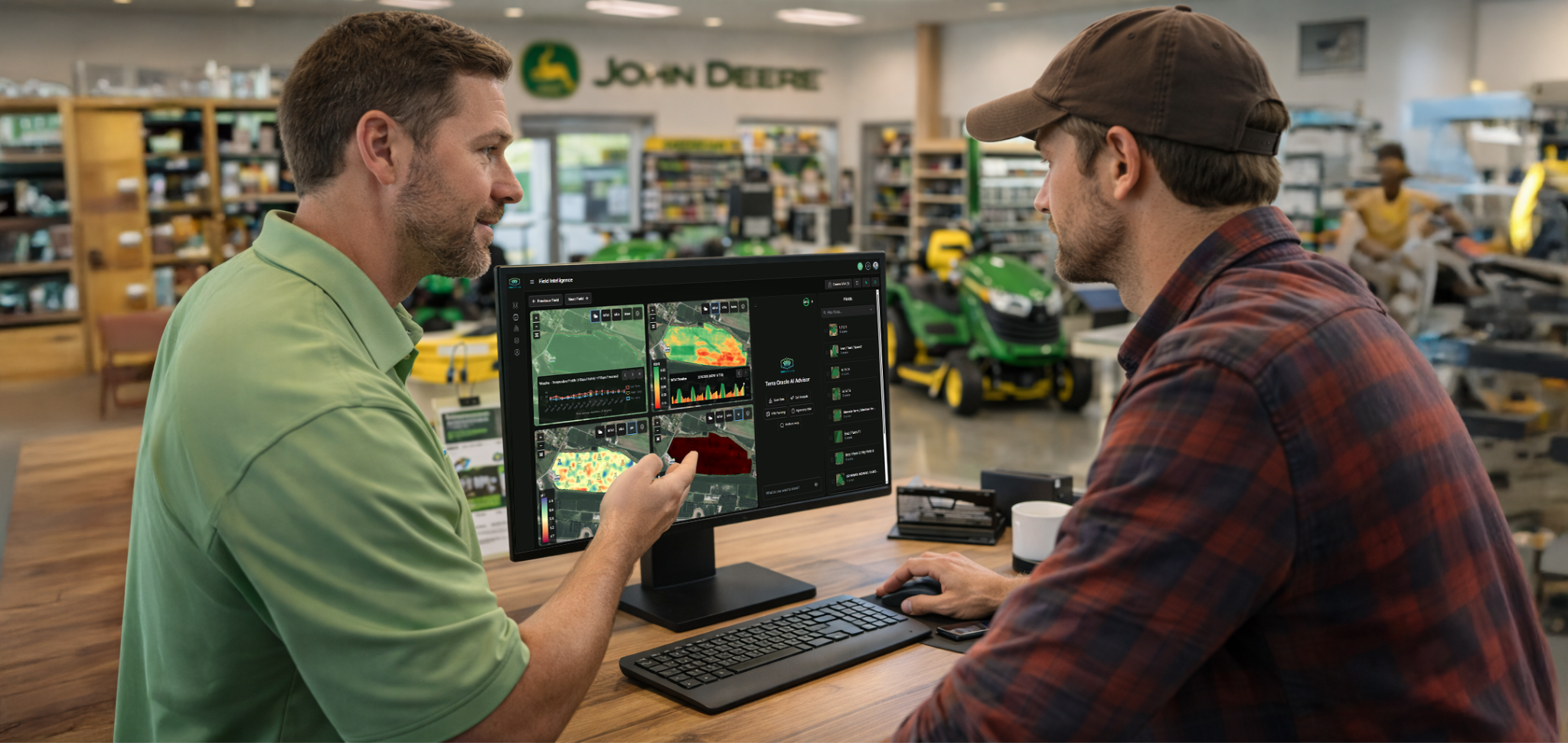
Instead of forcing the user to manually compare maps, spreadsheets, machine records, and market assumptions, the platform builds a field-specific reasoning context around the decision at hand.
That changes the role of AI completely.
It is no longer just a tool for retrieving information.
It becomes a system for interpreting what is happening in the field, identifying what matters most, and helping determine what to do next.
This is especially important because field decisions are rarely static. Conditions change. Weather shifts. crop stress develops. Market signals move. Operations succeed in one zone and underperform in another.
A useful agronomic system has to reason dynamically, not just store information.
From Data Layers to Field Decisions
When field context is connected properly, Terra Oracle AI can support the kinds of decisions that matter most in practice.
Variable-Rate Input Planning
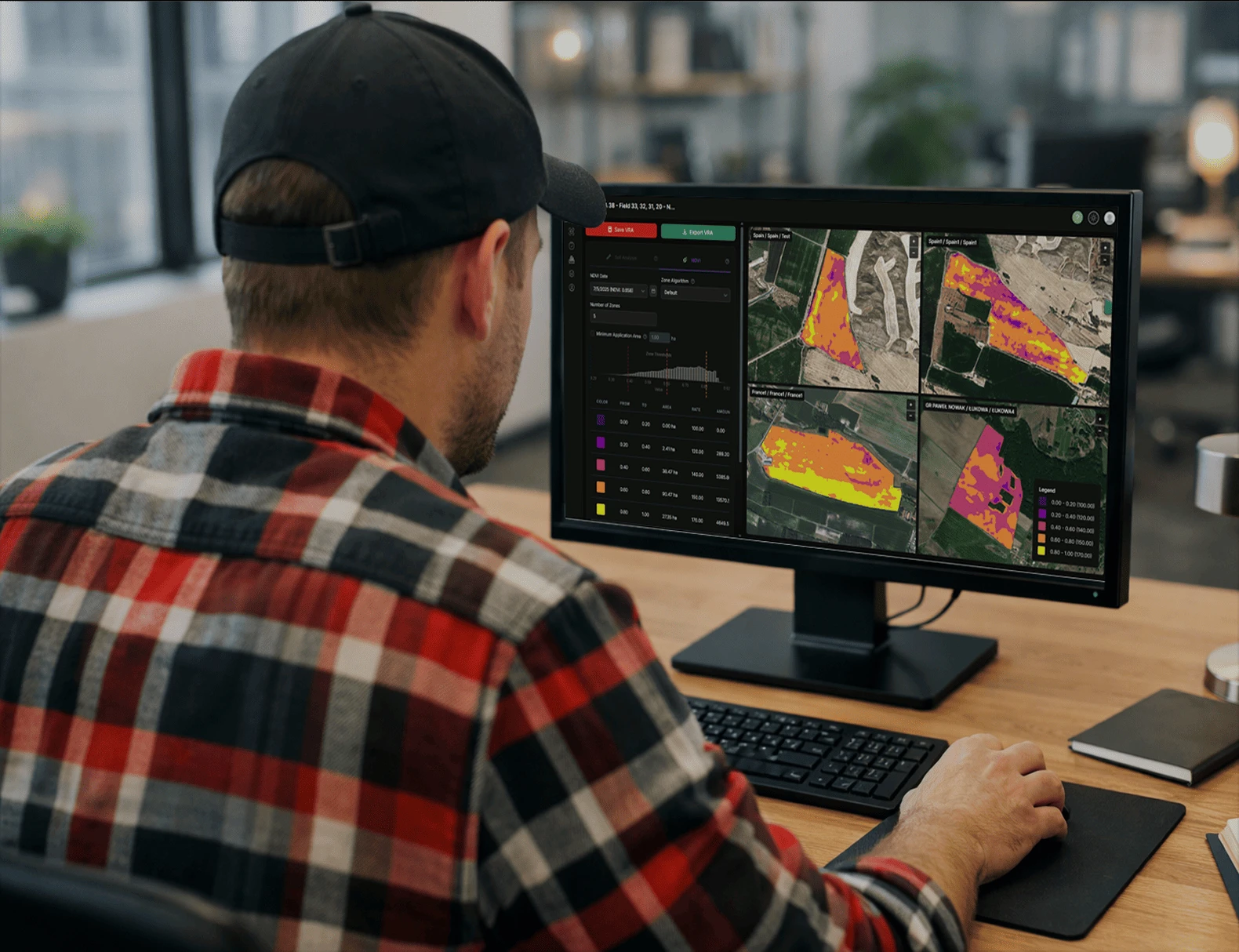
Instead of treating a field as a single average, the platform can combine soil variability, vegetation patterns, historical performance, and economics to identify where variable-rate application is justified and where it is not.
That helps answer questions such as:
- Where are inputs most likely to generate return?
- Which zones are already sufficiently supplied?
- Where is over-application increasing cost without improving outcome?
In-Season Stress Diagnosis
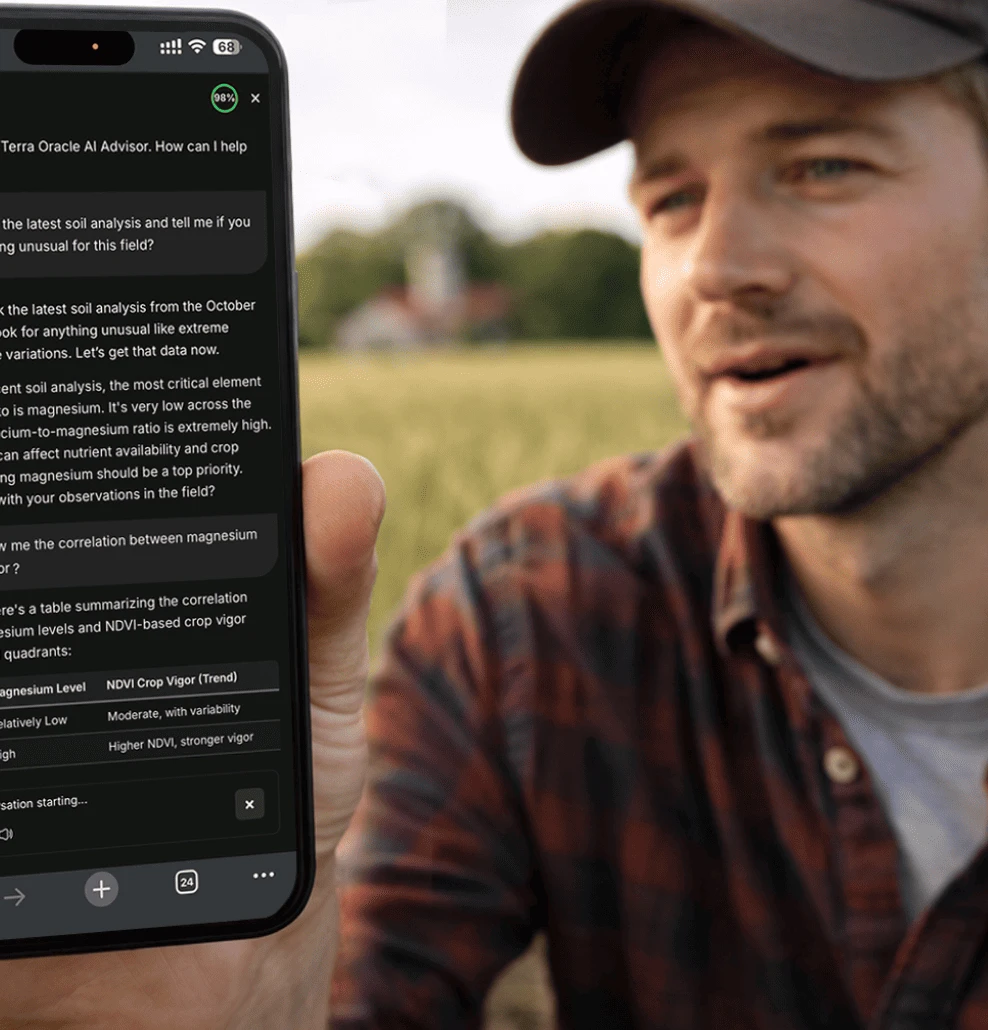
When NDVI or other crop signals begin to shift, the platform can interpret those changes in the context of soil, weather, and operational history.
This helps move from:
Something looks wrong.
To:
This zone is showing stress, the likely drivers are narrowing, and here is what should be checked or prioritized next.
Spray, Irrigation, and Timing Decisions
Timing decisions are often shaped by rapidly changing conditions. Weather alone is not enough. The right decision depends on the crop, the field condition, the operational window, and the likely value of acting now versus waiting.
Terra Oracle AI helps interpret those moving pieces together rather than one by one.
Yield and Margin Optimization
The best agronomic decision is not always the one that maximizes theoretical yield.
Often, the better decision is the one that improves margin, protects yield efficiently, reduces risk, or allocates inputs more rationally across variability.
That is where economic context becomes essential. Agronomic recommendations gain far more value when they are tested against cost, price, and likely return.
Why Operational Data Matters So Much
One of the biggest differences between a useful agronomic AI system and a limited one is whether it understands what actually happened in the field.
This is where machinery and operational data become critical.
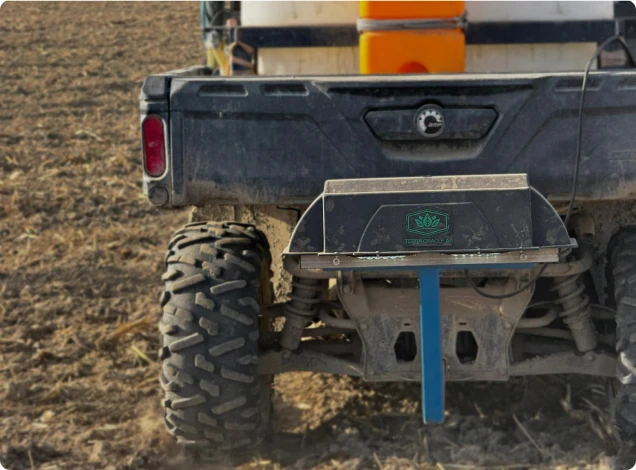
When Terra Oracle AI is connected to operational systems, it can reason with information such as:
- Seeding timing and execution
- Application history
- Tillage passes and depth
- Fuel use
- Harvest timing and performance
- Yield outcomes
- Sequence and timing of field operations
That makes the platform much more valuable.
Without operations data, the system may detect a pattern.
With operations data, it can more often explain whether the pattern is connected to execution, timing, soil response, field conditions, or an interaction between them.
That is the difference between identifying symptoms and understanding causes.

The Role of the User
If Terra Oracle AI brings together the data and the reasoning, what does the user contribute?
The answer is simple: real-world context that may not yet exist in the system.
That may include:
- A recent field observation
- A known equipment issue
- A treatment not yet synced into operations data
- Access constraints in a zone
- A local pest or lodging concern
- A business objective such as margin protection or yield preservation
This is the strongest model for collaboration between the user and the system.
The platform contributes structured field intelligence.
The user contributes the local reality the platform cannot fully infer on its own.
Together, they produce a much better decision than either one could produce alone.
From Insight to Action
The real test of agronomic technology is not whether it produces interesting analysis.
It is whether it helps drive action in the field.
That is why Terra Oracle AI is not just about surfacing information. It is about helping move from:
- Observation to diagnosis
- Diagnosis to recommendation
- Recommendation to execution
This is what makes AI genuinely useful in modern agronomy.
Not generic answers.
Not isolated dashboards.
Not disconnected data layers.
But a field-specific system that can interpret conditions, explain decisions, and support timely action.
A Better Model for Digital Agronomy
The future of digital agronomy will not be defined by who has the most data in isolation.
It will be defined by who can connect the right data, interpret it in field context, and make it useful at the moment a decision has to be made.
That is the role Terra Oracle AI is built to play.
It brings together soil intelligence, satellite monitoring, weather, economics, and operations into one reasoning system.
It helps farmers and agronomists understand what is happening, why it is happening, what to do next, and whether the action is worth taking.
That is how field data becomes field decisions.