
Beyond NDVI: Why Vegetation Indices Need Soil Context
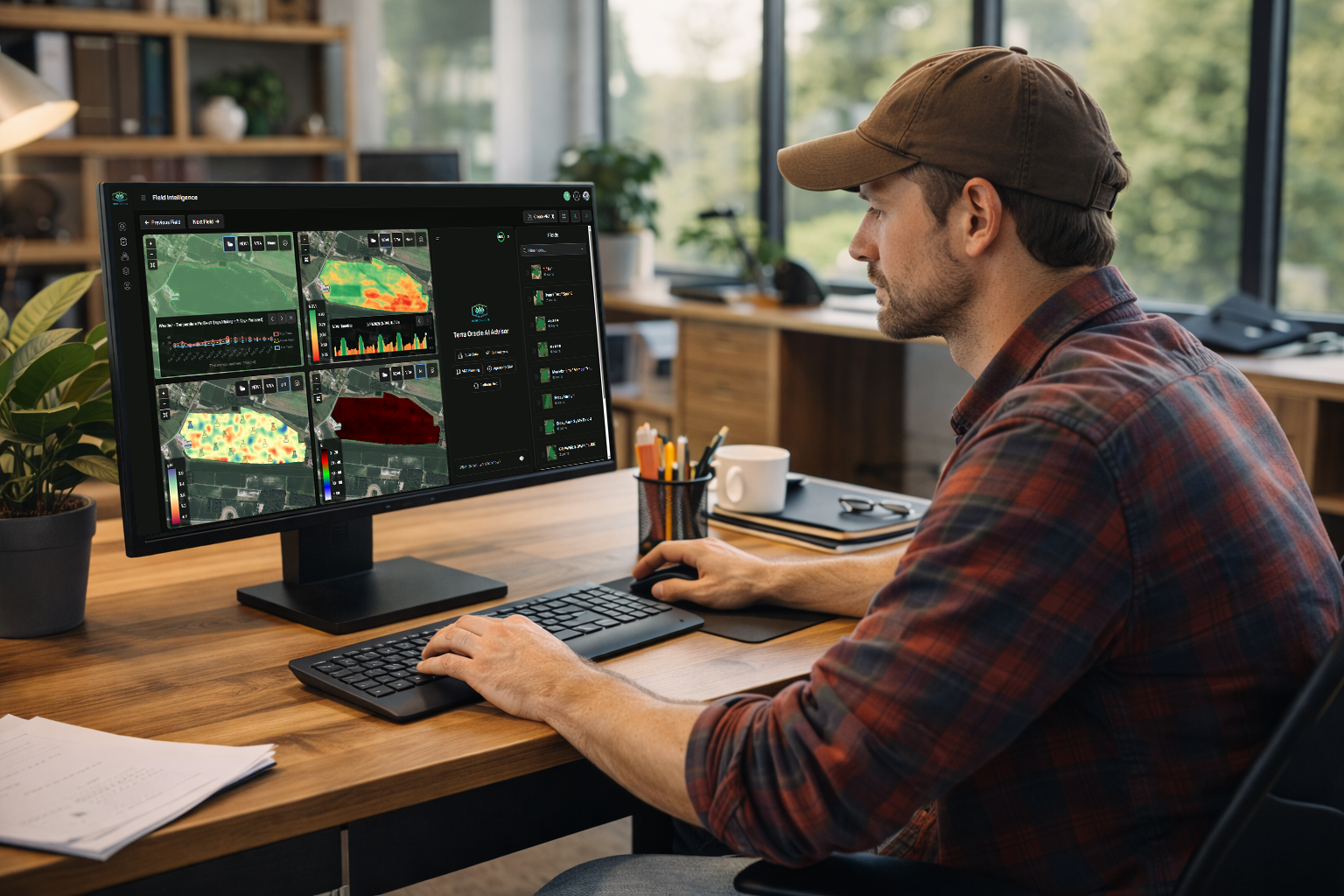
Satellite imagery shows where crops are stressed. Terra Oracle AI combines soil intelligence with crop signals to explain why - and support better decisions.
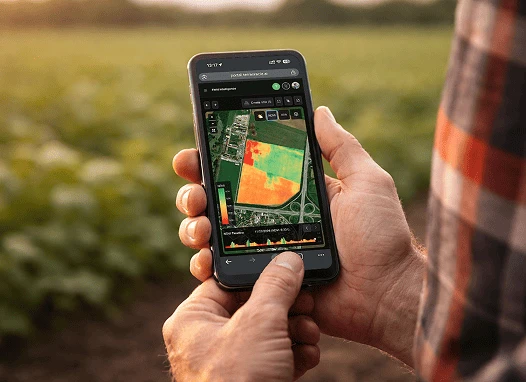
NDVI maps are now a familiar sight in modern agriculture.
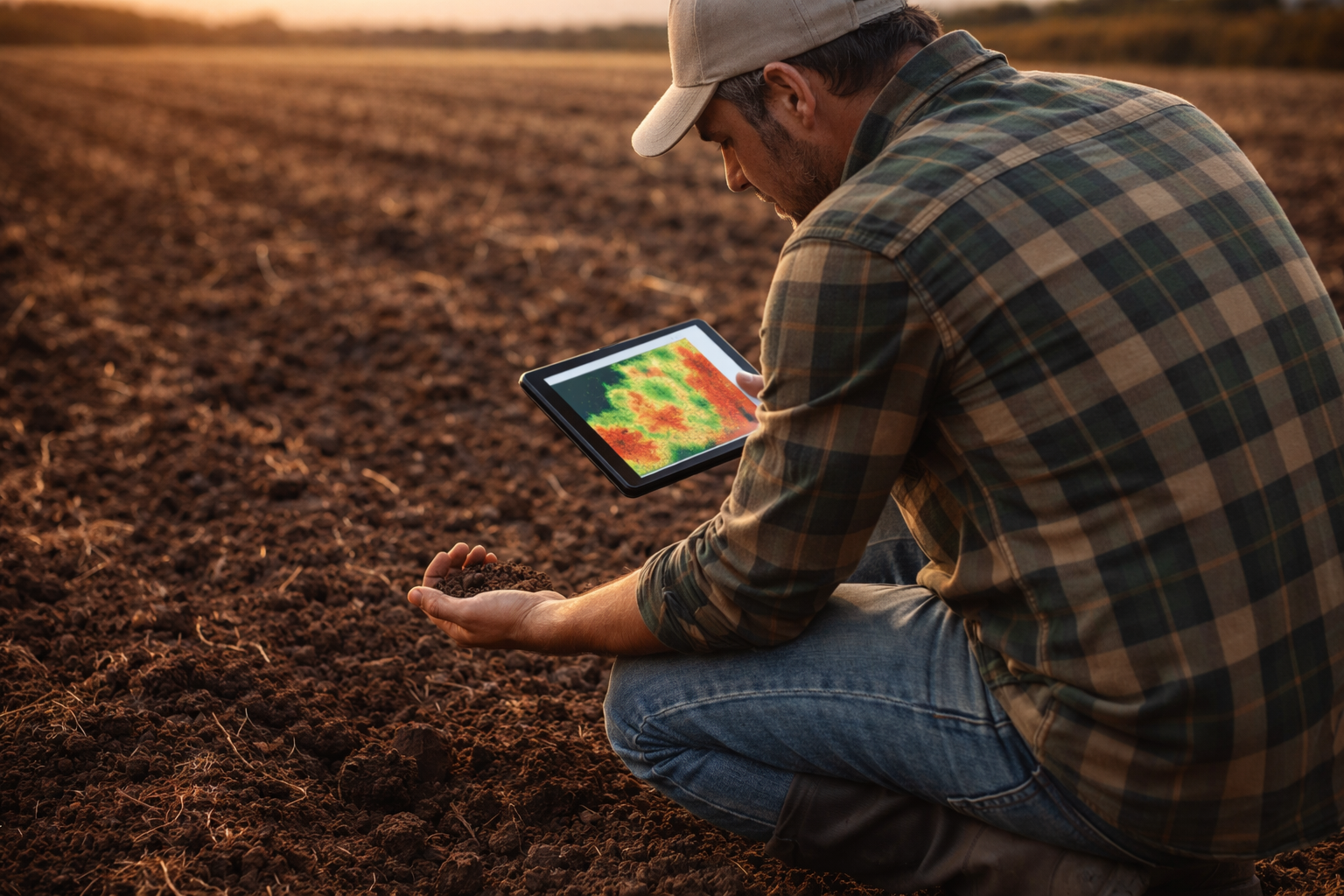
With a few clicks, growers can visualize crop vigor across hundreds of hectares. Green zones indicate strong biomass. Yellow or red areas highlight stress. The technology is fast, scalable, and operationally convenient.
But NDVI answers only one question:
What does the crop look like today?
It does not answer the more important question:
Why does it look that way?
That distinction defines the difference between observation and agronomic decision-making.
At Terra Oracle AI, that distinction is fundamental. Vegetation indices are valuable, but they become far more useful when interpreted in the context of soil variability, weather, economics, operations, and field history.

The Power - and the Blind Spot - of NDVI
The Normalized Difference Vegetation Index (NDVI) measures reflectance differences between red and near-infrared light. Healthy plants absorb red light for photosynthesis and reflect near-infrared light, producing high NDVI values. Stressed vegetation reflects differently, lowering the index.
As a monitoring tool, NDVI is effective. It reveals:
- Biomass differences
- Uneven crop emergence
- Mid-season stress patterns
- Areas of poor development
However, NDVI measures canopy expression, not soil condition. It captures the crop’s response - not the constraint behind it.
A low-NDVI zone might signal nitrogen deficiency.
Or it might reflect shallow topsoil.
Or acidic subsoil.
Or compaction.
Or poor water retention.
The index itself does not distinguish among these possibilities.
When Imagery Leads to the Wrong Intervention
Many farms rely on satellite-driven nitrogen adjustments during the season. A recurring pattern often emerges: weaker zones receive additional nitrogen year after year.
Yet yields in those areas frequently remain below field average.
In several large-scale cereal operations that transitioned to integrated soil intelligence, a consistent pattern became visible. Areas that repeatedly showed low NDVI were not primarily nitrogen-deficient. Instead, they were linked to:
- Acidic pockets limiting nutrient uptake
- Textural shifts reducing water retention
- Clay-driven nutrient fixation
- Structural variability affecting root development
Once soil variability was mapped at high resolution and calibrated with laboratory analysis, management strategies shifted from reactive nitrogen application to structural correction - lime adjustments, zonal phosphorus management, and revised fertilization logic.
Within two growing seasons, yield variability narrowed and nitrogen efficiency improved.
The difference was not better imagery.
It was deeper context.
Soil Determines Potential. NDVI Reflects Expression.
Crops respond to soil constraints long before symptoms are visible from space. Mineral composition, pH, organic matter, and texture shape the root-zone environment that ultimately governs nutrient uptake and water dynamics.
NDVI is sensitive to chlorophyll and biomass.
It is not sensitive to cation exchange capacity.
It does not measure potassium reserves.
It does not identify phosphorus fixation.
It does not detect structural compaction.
Two zones can display identical NDVI values while having fundamentally different soil conditions and long-term yield potential.
Relying on vegetation indices alone risks treating symptoms while leaving constraints untouched.
The Timing Problem
Another limitation of vegetation indices is timing.
By the time NDVI reveals stress, the yield penalty may already be underway. Some constraints - particularly those related to pH or structural soil limitations - require preseason correction, not mid-season reaction.
Soil intelligence operates on a different time horizon.
It defines the structural baseline of the field before crop stress becomes visible.
When soil data and vegetation indices are integrated, decision-making becomes proactive rather than reactive.
From Imagery to Decision Infrastructure
Vegetation indices are valuable tools. But they become significantly more powerful when layered over calibrated soil intelligence and interpreted within a broader field context.
Within Terra Oracle AI:
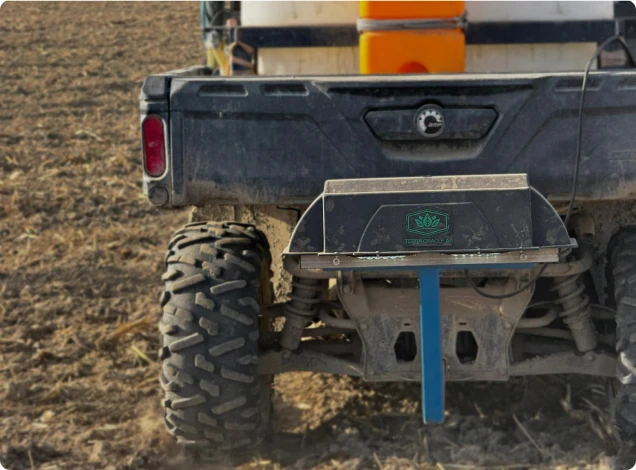
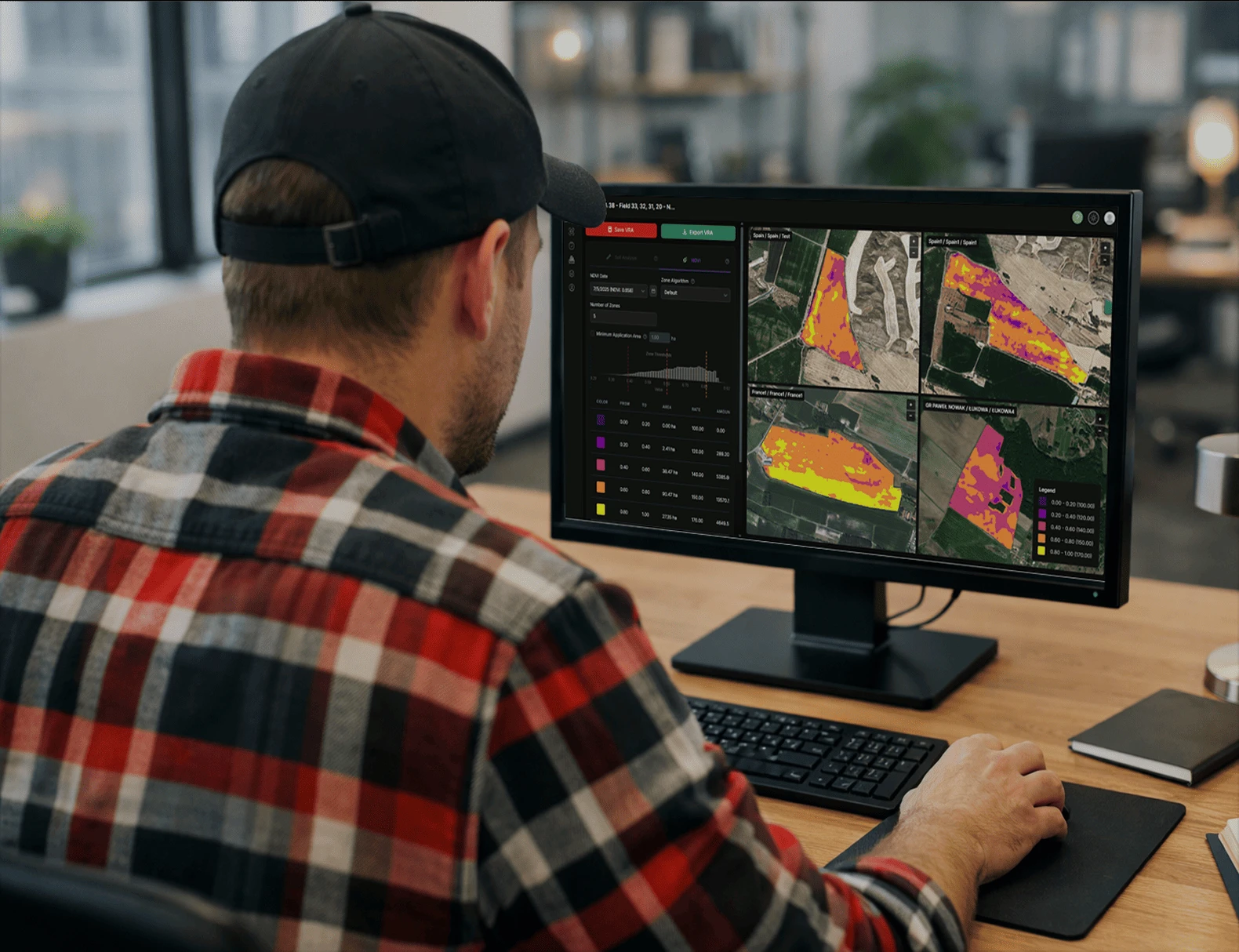
- Soil maps define management zones
- Vegetation indices monitor in-season crop behavior
- Weather helps explain timing and stress dynamics
- Operational history adds execution context
- AI models correlate crop response with soil-driven constraints
- Economic simulations guide input allocation
Instead of asking, “Where is the crop weak?”
The question becomes, “What is limiting performance here, and what is the economically justified response?”
This shift transforms satellite imagery from a monitoring dashboard into part of a structured agronomic framework.
A More Complete View of Variability
Field variability is rarely random. It is often anchored in soil physics and chemistry.
When vegetation maps are interpreted without soil context, variability appears as isolated patches of stress. When soil intelligence is added, those patches frequently align with:
- Textural transitions
- Mineralogical boundaries
- Historical management differences
- Lime and nutrient gradients
The pattern gains structure. The decision gains clarity.
The Future of Precision Agronomy
As farms scale and input volatility increases, precision must move beyond observation toward explanation.
NDVI and other vegetation indices remain essential components of digital agriculture. But they represent only one layer of a multi-layer decision system.
Sustainable margin optimization requires:
- Understanding soil variability at high spatial resolution
- Calibrating sensor data with laboratory validation
- Integrating crop expression with structural constraints
- Interpreting crop signals alongside weather, operations, and field history
- Modeling economic impact before applying inputs
Vegetation indices show what the crop is doing.
Soil intelligence explains why.
Terra Oracle AI brings those layers together so that the question is no longer simply where stress appears, but what is driving it, how important it is, and what action makes sense.
And in modern precision agriculture, understanding the “why” is what drives profitability.